
Planning an office relocation in NYC involves much more than moving desks and equipment. A successful commercial office relocation requires careful coordination of freight elevator reservations, Certificates of Insurance (COIs), employee communications, and IT disconnect and reconnect services. Every detail matters when it comes to minimizing business downtime and keeping your operations running smoothly.
Whether you’re relocating a small office or managing a large corporate move, this NYC office relocation checklist will guide you through the essential stages of the process. From initial planning and office packing to moving day coordination and final walkthroughs, this step-by-step office moving checklist will help you stay organized, protect your assets, and prepare for a successful transition.
Capital's 6-Step Office Relocation Process
Every NYC office relocation, regardless of size, follows six essential phases. Proper office relocation planning helps minimize business downtime, prevent unexpected costs, and keep your commercial move on schedule.
- Site Survey & Walkthrough — A project manager assesses the moving scope, building access, freight elevator requirements, and building regulations at both the origin and destination.
- Custom Plan & Scheduling — A customized office moving plan is developed around the company’s timeline, budget, and operational needs.
- Packing & Preparation — Office furniture, IT equipment, files, and specialty items are carefully packed, labeled, and prepared for transport.
- Move Day Execution — Professional moving crews execute the commercial relocation with coordinated logistics and clear communication.
- Install & Reconnect — Office furniture is installed, workstations are arranged, and IT equipment is reconnected at the new location.
- Final Walkthrough & Sign-Off — The completed office move is reviewed, outstanding punch-list items are addressed, and final project sign-off is confirmed.
Detailed Checklist by Step
Step 1: Site Survey & Walkthrough

What happens and why it matters: Before any commercial office relocation begins, a project manager should conduct a thorough site survey of both buildings, evaluating access points, freight elevator locations, corridor widths, loading dock requirements, and building-specific moving restrictions. This walkthrough establishes the foundation for an accurate office moving plan and helps prevent unexpected costs, scheduling delays, and changes to the moving quote.
Checklist:
- Schedule an office relocation walkthrough at both the origin and destination.
- Confirm freight elevator locations, dimensions, and cab door sizes at both buildings.
- Identify loading dock access and any moving restrictions at both addresses.
- Request written move-in and move-out requirements from building management at both locations.
- Confirm whether either building requires union labor for commercial moving services.
- Identify oversized office furniture, glass partitions, or equipment that may not fit standard freight elevators.
- Identify high-traffic corridors and walls that require protection during the move.
- Verify elevator and lobby measurements against large furniture and IT equipment dimensions.
Who’s typically involved: Facilities managers, the commercial moving company’s project manager, and building management at both locations.
NYC-specific consideration: Commercial buildings in Manhattan, Downtown Brooklyn, and Long Island City may have different office moving regulations, freight elevator reservation procedures, and move-in/move-out schedules. These building requirements can significantly affect your office relocation timeline. Confirm the specific requirements with both the origin and destination buildings before finalizing your moving schedule.
Step 2: Custom Plan & Scheduling

What happens and why it matters: Once the site survey is complete, a customized office relocation plan is developed around the company’s timeline, budget, and building requirements. This stage includes coordinating moving schedules, reserving freight elevators, and confirming building access restrictions. In NYC, commercial moving windows are often determined by building management rather than the tenant, making early scheduling essential to avoiding delays and business disruption.
Checklist:
- Confirm the target office moving date with company leadership, IT teams, and management at both buildings.
- Request and reserve freight elevator time slots, which may need to be booked weeks in advance in high-rise buildings.
- Confirm whether either building restricts commercial moves to evenings, weekends, or designated hours.
- Submit Certificates of Insurance (COIs) to both the origin and destination buildings.
- Verify each building’s specific COI requirements, including coverage limits and additional-insured wording.
- Allow buffer time for freight elevator scheduling conflicts or COI approval delays.
- Determine whether the office relocation will take place in a single phase or multiple phases.
- Confirm moving crew size, staffing requirements, and shift coverage with the commercial moving company.
- Establish a communication plan for employees, IT teams, and vendors.
Who’s typically involved: Facilities managers, Corporate Real Estate teams, Procurement, building management, and the commercial moving company’s project manager.
NYC-specific consideration: Certificates of Insurance (COIs) are a critical part of commercial office relocation planning in NYC. Building management may require specific coverage limits, additional-insured endorsements, and approved insurance wording before authorizing a move. Requirements can vary between the origin and destination buildings, so request both sets of COI instructions early and obtain written approval. Freight elevator reservations require similar coordination, particularly in Manhattan high-rise office buildings, where available moving windows may be limited or booked weeks in advance. A confirmed moving date does not necessarily guarantee an approved elevator reservation.
Step 3: Packing & Preparation

What happens and why it matters: During the office packing and preparation phase, furniture, IT equipment, files, and specialty items are carefully organized, labeled, and prepared for transport. This stage also includes installing floor and wall protection, tagging office assets, and photographing items for tracking. Proper office packing and labeling helps protect valuable equipment, prevent misplaced items, and minimize business downtime during a commercial office relocation.
Checklist:
- Confirm office packing responsibilities, including what employees will pack themselves and what the professional moving crew will handle.
- Distribute packing supplies and clear labeling instructions to employees before moving day.
- Tag and photograph office furniture, equipment, and specialty items as they are packed, recording them against the moving work order for accurate asset tracking.
- Coordinate floor and wall protection with the moving company, including floor runners, wall padding, and corner guards, based on each building’s layout and requirements.
- Identify and separately flag confidential files, archives, and sensitive records that require secure handling or chain-of-custody procedures.
- Identify fine art, safes, laboratory equipment, and other high-value office assets requiring specialized packing and handling.
- Confirm a separate packing and labeling plan for IT equipment, including computers, monitors, and related electronics (see IT Relocation section below).
- Establish a packing completion deadline before the scheduled office moving date.
Who’s typically involved: Facilities managers, Office and Workplace Management teams, IT personnel, employees, and the commercial moving company’s crew and project manager.
NYC-specific consideration: During a commercial office move in NYC, property protection requirements are typically established by building management and confirmed during the initial site survey. These requirements may include floor runners, wall padding, corner guards, and protection along designated moving routes. Coordinate with the moving company to identify high-traffic corridors and map the required protection areas against each building’s floor plan before moving day.
Step 4: Move Day Execution
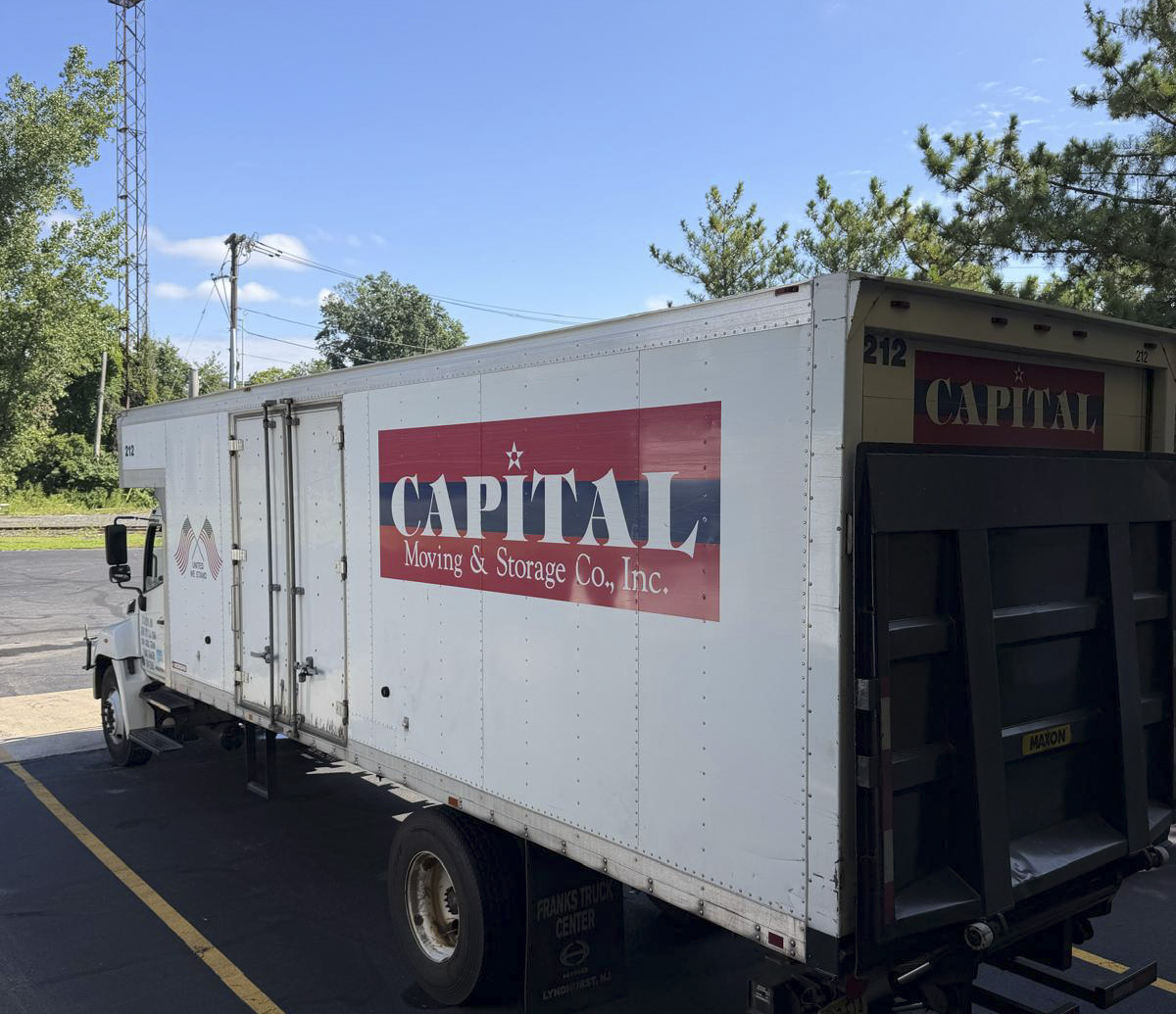
What happens and why it matters: During commercial office moving day, professional moving crews coordinate transportation, building access, furniture handling, and communication with Facilities and IT teams. This is one of the most critical phases of an NYC office relocation, as improper coordination can lead to property damage, scheduling delays, and business downtime. A well-planned office move should follow an established schedule, minimizing the need for last-minute decisions.
Checklist:
- Confirm the designated on-site point of contact from Facilities or Operations for moving-day questions and coordination.
- Verify that the moving crew has the approved freight elevator reservation and required building access credentials.
- Confirm that floor, wall, and other required property protection measures are installed before moving begins.
- Track office furniture, equipment, and other assets against moving work orders as items leave the origin building.
- Coordinate IT equipment disconnects with internal IT teams or approved vendors before moving crews begin handling equipment.
- Confirm that building security and reception teams at both locations are aware of the commercial moving schedule.
- Maintain an ongoing punch list to document and address any issues that arise during the office relocation.
- Ensure the moving crew’s departure time aligns with the building’s approved moving window to help avoid overtime charges.
Who’s typically involved: Facilities managers, IT teams, the commercial moving company’s crew and project manager, and building security or management at both locations.
NYC-specific consideration: Many Manhattan commercial office buildings restrict moving activities during regular business hours, particularly when freight elevators, loading docks, and shared lobby areas are involved. As a result, after-hours and weekend office moves in NYC may be necessary to comply with building requirements and minimize disruption to daily operations. Exceeding an approved freight elevator reservation or moving window can result in additional building charges. Confirm permitted moving hours, access procedures, and scheduling restrictions with building management before moving day.
Step 5: Install & Reconnect

What happens and why it matters: During the office furniture installation and IT reconnection phase, furniture, workstations, and equipment are positioned according to the approved destination floor plan. Computers, monitors, network infrastructure, and shared office equipment are reconnected and tested to ensure employees can resume work with minimal disruption. Proper coordination between Facilities, IT teams, and the commercial moving company is essential to minimizing downtime after an office relocation in NYC.
Checklist:
- Confirm that office furniture placement matches the approved destination floor plan.
- Reassemble office furniture and complete any required carpentry or furniture installation at the destination.
- Reconnect employee workstations, monitors, and peripherals, including cables, power connections, and docking stations.
- Reconnect and test network rooms, servers, and IT infrastructure before releasing the space for employee use.
- Confirm that multifunction printers (MFDs), copiers, and other shared office equipment are reconnected and functioning properly.
- Perform initial functionality testing on reconnected IT equipment before the moving crew leaves the site.
- Document final furniture and equipment placement against moving work orders to maintain an accurate relocation audit trail.
- Conduct a walkthrough of the new office space to confirm that no furniture, equipment, or other assets were misplaced or left in transit.
Who’s typically involved: Facilities managers, internal IT teams, the commercial moving company’s crew and project manager, and specialized IT relocation personnel when included in the moving services.
NYC-specific consideration: During a commercial office relocation in NYC, coordinating IT disconnect and reconnect services is essential to minimizing operational downtime. Whether IT reconnection is handled by the moving company’s specialists, an external IT vendor, or the organization’s internal team can significantly affect the relocation timeline. Confirm responsibilities, scheduling, and equipment testing requirements in advance to ensure workstations and critical systems are ready when employees return to the office.
Step 6: Final Walkthrough & Sign-Off

What happens and why it matters: The final walkthrough and project sign-off mark the completion of a commercial office relocation. During this phase, the moving company’s project manager and Facilities team verify that all furniture and equipment have been delivered, outstanding punch-list items are resolved, and both the destination and origin spaces meet applicable building requirements. A thorough office relocation final walkthrough also helps ensure compliance with commercial lease obligations, including returning the vacated office space in the required condition.
Checklist:
- Conduct a final walkthrough of the destination office with the moving company’s project manager to confirm relocation completion.
- Review and resolve any outstanding punch-list items identified during moving day.
- Verify that all tagged office furniture, equipment, and assets are accounted for against the relocation inventory and audit trail.
- Inspect the vacated origin space to confirm it meets the landlord’s move-out condition requirements.
- Confirm that cabling and low-voltage equipment at the origin location have been identified, labeled, and removed where required by the lease.
- Return keys, access badges, and other building credentials for the vacated office according to building management requirements.
- Obtain final project sign-off from building management at both the origin and destination locations.
- Archive all office relocation documentation, including work orders, photographs, asset locations, and completion records, for internal reference.
Who’s typically involved: Facilities managers, the commercial moving company’s project manager, and building management at both the origin and destination locations.
Planning an Office Relocation in NYC?
From building requirements and logistics to IT coordination
and final walkthroughs, Capital Moving & Storage can help
you plan your next office move.